Potatoes
Age seven. A small town near Delhi, at my grandmother’s house.
She took care of us in the hours that mattered most—after school, before our parents returned. The in-between hours, when moods were fragile and hunger made everything louder.
I don’t remember what we argued about.
But even an uncertain child can feel fiercely right.
I remember the moment I yelled at her.
Her face—shock first, then something quieter. Recognition, maybe. The kind that says: this is how it happens, tempers tempered by hunger.
And immediately, I knew.
The words had already left me. There was no gathering them back, no undoing the hurt that now hung in the air between us. I felt ashamed, not hungry. She felt it too but knew what it was and wasn’t.
Women across generations often sense each other without needing language.
So I tried, in the small ways a child knows how, to repair something broken. I hovered. Helped. Pressed her forehead gently. I asked her to sit while I stood in her place.
And just when I was certain she must hate me, she walked into the kitchen.
Soon, the familiar smells began to rise—boiled potatoes, tamarind, spices blooming as they met heat. She made imli aloo the way I loved it: tangy, soft, sharp with heat.
Whoever said the way to someone’s heart is through their stomach never understood women.
This wasn’t about food. It was about forgiveness—wordless, complete.
Age eleven. My mother was forever trying a new recipe.
Every few days she started again, adjusting a spice, changing the order, cooking the same dish until it became the version she had imagined.
That month, it was dum aloo.
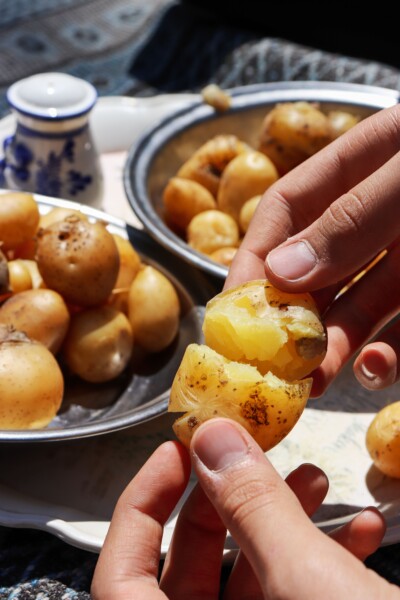
Small potatoes, carefully chosen. Boiled, peeled, pricked with a pin so they could absorb what came next. Fried until crisp, then folded into a slow-cooked gravy of onions, tomatoes, and yogurt.
She’d hand me the spoon.
“Taste this. What’s missing?”
She cooked like she was solving something.
As if getting dinner exactly right might quiet everything else that refused to be.
Age twelve.
Still living in a small town, traveling to a bigger one for school. One day, without warning, the plan collapsed. The ride that took us there—gone.
I remember the stillness in the house.
No clear answers. No immediate solution.
For the first time, I saw something unfamiliar in my parents: helplessness.
But that evening, my father went to the market.
He came back with potatoes, garlic, and onions.
Of course he did.
He had his own way of cooking them—precise, almost ritualistic. Peeling, cutting, washing. A kilo at a time, because we ate like we trusted there would always be more.
The onions browned slowly—just past golden, almost crisp. The potatoes folded in, cooked gently, patiently. Sometimes he held a cigarette between his lips, as if even that couldn’t interrupt the process.
You weren’t supposed to rush it.
But that didn’t stop you from waiting, from hovering, from believing in what was coming.
That night, nothing about our situation had changed.
We still didn’t know what we would do the next day.
But we ate.
Bellies warm.
And somehow, that was enough to make the future feel possible again—if only reset, if only for a moment.
I think about those moments now, and what connects them. It was never really the potatoes. It was the instinct to walk into the kitchen when words had failed. In anger. In uncertainty. In fear. Someone goes to the kitchen. Someone gathers what they can. Someone begins again. One small, steady step at a time.
Years later, I find myself standing in my own kitchen.
Sometimes after sharp words—mine or my daughter’s.
Sometimes because there is nothing else to do about whatever has broken that day.
You can’t always take words back.
You can’t always solve what’s broken.
But you can still make something warm.
You can still feed what matters.
And sometimes, that is how we forgive.
Sometimes, that is how we begin again.
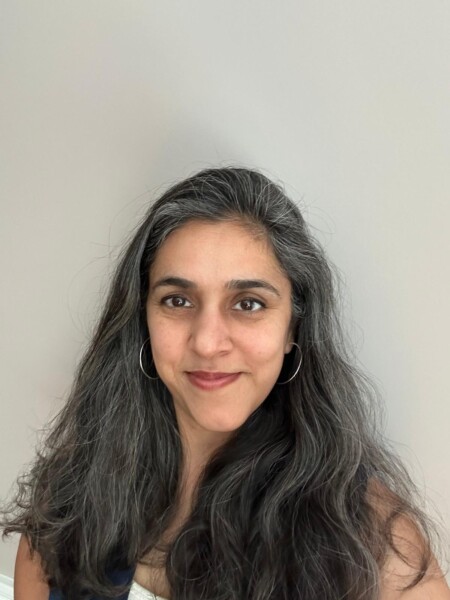
Toshita Kumar is a physician, immigrant, and emerging writer whose work explores memory, belonging, and the ways ordinary moments become lasting stories. Drawing on experiences in medicine, migration, and family, she writes about loss, resilience, and the quiet grace of simple presence, everyday human connection, and moments that invite wonder.