The Third Check
Maybe my father never liked me. Maybe I never liked him.
I was born in 1960. I’m fifty-eight now and he is long gone.
Our family lived in Evanston, Illinois for a time then moved to Pittsfield, Massachusetts where my father started a small printing company. My mother would have enough money to buy food and pay bills during the first two or three weeks of every month when my father’s company sent out invoices and had little left during the remaining days of the month when cash, as well as her patience, was exhausted.
That my father loved my brother more than me made sense. Even at an early age it made sense. Ricky was quiet, submissive. Unchallenging. As a child you set him down and he would stay. Putting me down at an early age was taking a risk. I developed an internal resolve and aggressive identity long before my parents knew how to deal with it.
“He wants to go outside and play,” my mother said.
“He always wants to do something it’s the wrong time to do,” my father would say. “I put him there for a reason. That should be good enough.”
# # #
As years passed, my reliance on my parents lessened and Ricky’s grew because he was the “good” child. The obedient child. The child parent’s glowed about to strangers.
Once in high school, I blossomed and, in every way, left the nest. By my senior year, several small liberal arts colleges recruited me for their Lacrosse team and offered a modest academic scholarship. They wanted me more than my father ever had. And in many ways, I let him know that I was wanted more by strangers than by my family. My mother looked on, often condemning how my father’s strict Eastern European upbringing was not how she wanted to raise her family.
My mother had her own issues, and I believe never recovered from the mistake she made marrying my father, instead of Glenn, a story of tearful regret I heard only once before she also passed.
What affection my mother displayed for my father and was controlled and quickly waned, while my father tried in vain to hold on to his early affection for his wife. After a while the only thing they had in common was that they were born on the same year and day in May.
# # #
My father wasn’t a bad person, or hurtful or drank or abusive. He believed since he was the head of the household he should be treated with respect. There was no dialogue to be had regarding respect, which he liberally interpreted as anything he said should be followed, no matter the issue.
As I grew up, dinners became a battlefield of dissension. My father made statements about life, politics, the world, anything that came to mind. By the time I was in my early teens I had skirmished with him so many times, revealing the emptiness of his statements and unsubstantiated facts he threw out over dinner that I didn’t care if he claimed the house was on fire.
I just stopped listening, a tactic that my mother had long ago adopted. That left conversation between my father and brother. It was laughable, if it weren’t so tragic.
I believed then as I do now that at some point my father and I unconsciously decided to make the most of who we were and purposely avoided conflict whenever possible. We kept each other at an emotional distance, while my mother retreated into her romance novels, and my brother blended into the background as if he was never there.
Truth be told, Ricky eventually got his pound of flesh. When I graduated with an Honors MBA degree, Ricky took photos of me celebrating with friends and family. Weeks after, he apologized for having lost all three rolls of film. I never realized he was such an accomplished actor.
# # #
When I turned sixteen, and months away from leaving for college, I made one last attempt to connect with my father. We both liked baseball. Sometimes we would watch a few innings together but never shared what we saw or felt or experienced.
“Who do you think will win?” I said one June afternoon while the Yankees were playing Boston to an eighth inning 3 to 3 tie.
I was as surprised as my father was at my question. A few seconds passed, and another few pitches, and the inning was over. The game remained tied.
“The Yankees.”
“How about two dollars? I take Boston, and you take the Yankees?” I said, not caring what team I had to take.
I had been mind-betting for over a year on hockey, baseball, and football. I quickly developed a sense of the issues, what to look for, what made a difference, like strengths and weaknesses and general condition of the players, past performances, the condition of the field, and the weather. It was just the way my mind worked. It was something that came naturally to me. Several decades later it became the foundation for my financial success. It was also a secret. No one knew about it, mostly because I rarely talked about myself to anyone, friends included.
“Two dollars?”
“Two dollars.”
“Fine.”
We watched the last inning together. My brother was in our bedroom, my mother taking a walk outside. All her walks were taken in solitude.
The Yankees won by a home run in the bottom of the eleventh. My father got up and turned off the television as though he had seen enough, which meant everyone had seen enough, and disappeared into my parents’ bedroom.
Later that night I made out a check to my father for two dollars. I put it in an envelope and mailed it the next day. It was my third check from my newly opened bank account.
# # #
Years later, at my father’s funeral, I thought about the check that was never cashed. My father never mentioned it, so it either got lost in the mail or he tore it up. Maybe he was offended by the way he received it. A son, a loving devoted son respectful of his position in the family would have handed over two singles, congratulated his father, and gone about his business.
On the back of the check I had written, “To my father, who unjustly won the sum of two dollars by taking advantage of his brilliant, funny, athletic, outgoing, thoughtful, kind, loving, generous son who innocently made this wager at his father’s insistence and lost his last two dollars which would have covered the expenses and tuition for his first year in college, and because of this wager he will no longer be able to get an education and will probably spend the rest of his life toiling in some dark alley, hoping for handouts from strangers, all because he wanted to please his father.”
I made sure the entire note took up every inch of the back of the check. There was no room for his signature to cash or deposit it, or to avoid some teller from reading it.
I saw an opportunity, maybe a last one, to connect with my father. He might have seen it as an offence. A sign of my disrespect. Maybe we were both right.
My father passed when he was eighty-four. My mother and I believe he died of a broken heart. Life was not what he expected it to be. His home and wife were frustrations even my brother’s mindless devotion couldn’t heal. I cleaned up his business matters after he died. My brother had long left and wanted nothing to do with either me or my mother, which was a gift.
I spent much of a month settling his financial affairs and closing out his printing business, an effort which was mainly focused on collecting on receivables and stalling on payables. After so many years it had grown but was so poorly managed it wasn’t worth much more than when it was first organized.
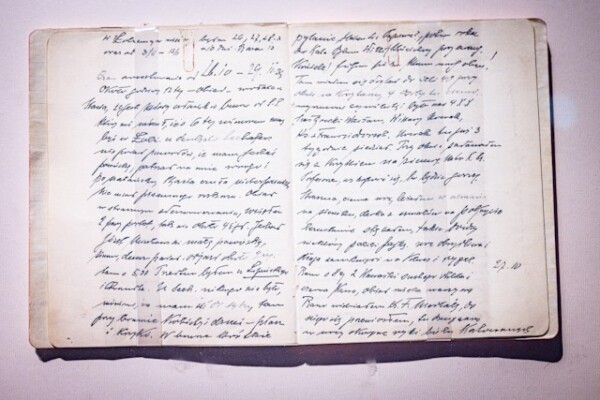
One of the last things I found in his office was a small black notebook. Page after page was covered in his handwriting and addressed to a “Doreen.” They weren’t quite love letters but expressed an abiding affection and commitment. There were no letters.
I wasn’t angry, and only slightly surprised. He had lived a life of what must have been excruciating loneliness and regret. Since they were words on a piece of paper in a notebook, I never imagined he wrote these feelings to another woman. Doreen, whoever she was, might not have even known of my father’s feelings. He was that emotionally closed off, or maybe that faithful to my mother.
Taped to the back of the last page I found check number 103. I reread the back of the check a few times over. It was a tie game when we made the bet.
The score with my father remained tied in an overtime loss that lasted forever.
Maybe my father never liked me. Maybe I never liked him.
It happens.

Arthur Davis was nominated for a Pushcart Prize, received the 2018 Write Well Award for excellence in short fiction and, twice nominated, received Honorable Mention in The Best American Mystery Stories 2017. His work has been published in journals as original and reprint fiction. Additional background at www.talesofourtime.com, Amazon Author Central and the Poets & Writers Organization Directory.