A Reason To Try Again
AIt’s funny, when they met, how unremarkable it should have been.
The bar smelled like limes & the stale press of bodies, & she was counting
the exits like she always did, one by the bathroom, one out the side door.
He was drinking something dark, no ice, & when he said her name— not to her,
but through the space between them—it felt more like a hand
reaching than a word. She told herself it was nothing.
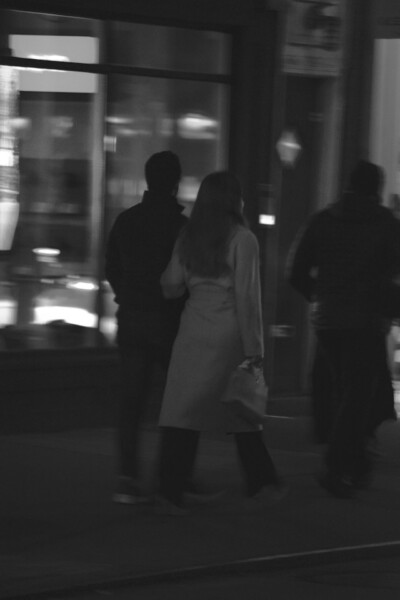
Later, outside, the pavement still warm from the day, he asked
what she did for work, & she laughed, shook her head. “I do a lot of things,”
she said, because that felt true enough. He said, “Me too,” & she believed him.
By the time they made it to the corner, she was telling him about the summers
she used to spend in her uncle’s attic, cataloging old postcards & dusty vinyls
no one wanted. He said he liked that, the idea of holding on to things no one cared about
anymore. She didn’t know if he meant her.
When he kissed her goodnight, it wasn’t the kind of kiss you tell anyone about
—too quiet, too careful, the kind that doesn’t demand but simply offers.
They didn’t fall into anything fast. For weeks, it was small, deliberate steps:
a text about some movie he saw once, a photo she sent of her coffee mug,
cracked but still holding on. They met at bookstores because it felt less vulnerable
than a dinner, & neither of them wanted to fill the silence with forks & knives.
He read aloud to her once— not poetry, not some grand declaration, but an article
about wolves returning to Yellowstone, how they reshaped rivers, changed the way
everything grew. She told him it made her sad, though she couldn’t say why.
The first time he stayed over, he asked about the paintings on her walls, the ones
she hadn’t hung herself. “Leftovers,” she said, from the last person who thought
they could live there. He traced the edge of one frame, his hand slow, careful,
like he didn’t want to disturb whatever was holding it up.
Months passed, & they fell into the rhythm of it: two toothbrushes by the sink,
his jacket slung over her chair, her books stacked on his desk. She let him into her habits,
her mornings of tea & silence, her nights of pacing the kitchen while the pasta boiled over.
He wasn’t perfect—he forgot things, said the wrong words sometimes,
left his shoes in the middle of the floor. But he knew when to hold her
without asking why, when to pull her back from the edge of whatever storm was brewing.
Still, there were cracks she couldn’t quite seal: his silences when she asked
about his father, the way he didn’t always finish his sentences,
as if some parts of him were meant to stay buried.
They fought once— not loudly, not with shouts, but in the kind of quiet
that doesn’t let anything settle. She said, “You don’t tell me enough,”
& he said, “You don’t ask the right things.” The words hung there, brittle,
before breaking apart.
& yet, he stayed. & she let him,
because even with the silence, even with the cracks,
there was still something there—a pulse, a weight,
a reason to try again.