The Road Between Us
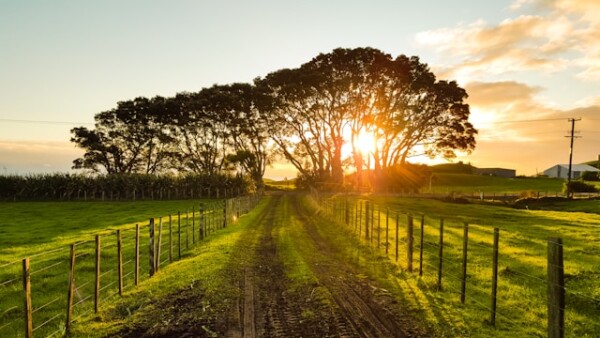
The road ran plumb straight, ideal for speeding. Then, the pavement gave way to gravel, and the route turned into a tangle of hills and valleys. My hands were sweaty on the wheel. My head ached from scanning for potholes and from a lack of sleep. On the headlands, I rounded a curve and had to slam on the brakes to avoid hitting two sheep, their eyes fixed on me, their lips chewing cud.
The ring case fell off the passenger seat onto the floor. I pulled over, picked it up, and put it in my blazer’s side pocket.
In some unnamed harbour, wild horses huddled near the river flats, ears twitching as my Toyota rattled past. I slowed down for kids playing on the road. When I stopped, they crowded around.
A woman’s voice blared, “Leave the young man alone.” She leaned over at my window and glanced inside. “Good day to you, sir. Headin’ anywhere special?”
“End of the road,” I said.
“We’re starved for visitors, and I bet you’re thirsty. Don’t be a stranger.”
“Thanks for the offer. I’ll stop in on my way back, later today. I’m in a hurry.”
“It’s Saturday. Leave hurryin’ for Mondays.”
I parked the car. As soon as I stepped into her house, I caught a strong whiff of fried fish. My new blazer would absorb the smell. I thought of leaving it in the car, but she’d already pulled out a chair for me.
“You’re not from these parts, are you?” she said, as we sat at the kitchen table.
That was the start of the questions. Her husband came in from cutting hay and offered me a beer. Next thing I knew, their little one was bouncing on my knee, and I was telling them about you, Virginia, how we’d met in the hospital cafeteria three months earlier, how I’d helped you, kept you company. I’d practised a speech with lines about being a hard-working man, trustworthy too. A well-off aunt on Long Island had practically begged me, her favourite nephew, to visit. We could have our honeymoon in New York. Mr. and Mrs. John O’Neill strolling the avenues.
I showed the woman and her husband the three-stone diamond ring. “Too flashy?”
The husband shrugged. “I know as little about rings as I do about women.” He held up a beer. “Another one?”
I shook my head. “I’ll suggest a walk on the beach and write ‘Marry me, Virginia,’ in the sand.” I turned to face the woman. “What do you think?”
“Depends. Are your words askin’ or tellin’?”
*****
I remember the first time I saw you standing tall in front of me in the hospital cafeteria line, your clothes fit for a farmhand. The leather was scuffed off the toes of your shoes, the heel worn on one side. You turned around and smiled. The fluorescent lights highlighted the copper tones in your hair.
“Service is slow,” I said.
“I don’t mind the wait.” You were holding vigil at your mother’s bedside and took your meals in that cafeteria. I’d gone to the hospital to see a co-worker who’d lost a leg in a car accident. When my co-worker was discharged, I kept visiting just to see you.
You weren’t used to the city and had no relatives or friends there. You wanted to take the bus to your motel at night. I had to convince you to let me drive you. I waited, the engine idling, until the light came on inside your room. You offered to pay for gas, I flatly refused. When I brought you food, you wanted to pay me, but I would not allow it. You told me not to buy any more flowers for the room, but I had to replace them once they wilted.
When you complained about a patient in the other bed turning on the television at three in the morning, I spoke to Nurse Hickey. She promised to check on getting a private hospital room for your mother.
Once when I found you asleep in the chair, I stayed until you woke, brought you a sandwich and hot tea. You closed your eyes, wrapped your arms around me quickly, then let go.
Later, when Nurse Hickey insisted visiting hours were over, you said, “He’s with me.”
But then, your mother died, and you vanished. You left a note in the room with your address:
I don’t know what I would have done without your help, esp. the private room.
Sorry I couldn’t say goodbye and thank you in person.
I’ll miss you, xoxo
I returned regularly to eat at our usual table in the cafeteria. I parked at the motel like I was waiting until you were safely inside. I wrote letters to you and discarded each one. Eventually, I sent you a sympathy card, said I’d like to offer condolences in person.
You wrote back and invited me for dinner, “Saturday, August 7, around noon.”
*****
Your directions were easy to follow. A biscuit-box house at the end of the lane, top of the hill, overlooking the bay.
“So this is where she comes from,” I said to myself.
The porch door was wide open. I knocked.
A man’s voice said, “Come in.”
I tapped my pocket, a cue for the ring to be on standby.
In the kitchen, your two brothers in jeans and T-shirts stood to shake my hand, their grip firm, hands rough and calloused.
Your father rested on the daybed, his cheeks hollowed, sucking on his pipe. He eyed me with disinterest.
You stood at the stove, flushed, a strand of hair hanging over your face. “Welcome,” you said, as if you’d seen me only an hour and not months ago.
The night before, I’d barely slept, picturing us together. I imagined you in a summer dress, hair loose, feet bare. I thought about the time you wrapped your arms around me. I felt sick at the thought of you with another man.
I reached forward to shake your father’s hand. “Good day, sir. Pleased to meet you. Sorry about your wife.”
One hand held his pipe, the other lay under his head. He nodded.
You pointed to a chair at the table. “Go ahead, please.”
“You first.”
“No, you.” You turned to face the stove, then the sink, and came to the table only once I was seated.
Your father lay on the daybed, eyes closed. Your brothers eyed me like they’d never seen a man from the city.
I removed my blazer and wedged it behind me on the wooden chair. I loosened the top button on my dress shirt and ran my hands over the starched creases in its sleeves to make them less noticeable.
You served lamb, and I thought of the sheep I’d seen on the drive. You were up one minute to fetch water for your father, the next minute, more potatoes for your brothers, as if they weren’t old enough to serve themselves. I waited for you to ask about the ride there. I wanted to mention how early I’d left and how bad the potholes were.
“After dinner, would you show me the cove, Virginia?”
Your brothers looked at each other and snickered. “Nothing much to see,” one said.
I’d asked Virginia, not him. “I wouldn’t mind visiting the beach.”
He had an annoyingly high-pitched laugh. “Rocks and sand, hungry crows and gulls. Save yourself the trouble.”
I raised my glass. “May your mother rest in peace. My sincere condolences.”
“Thanks, John,” you said.
Your brothers mumbled, “Thank you.”
“It’s because of your mother that Virginia and I met.”
“Yes, we ate together a couple of times in the cafeteria.”
“A couple?” I forced a laugh. “More than that.”
“I wasn’t counting,” you said.
*****
Your brothers were gone as soon as they finished eating, didn’t bother clearing their plates, no “Nice meeting you.”
I offered to help with the dishes.
You spoke over the clatter of plates and cutlery. “No need.”
The lines I’d rehearsed didn’t match the scene. This wasn’t the moment to tell you how much I missed you, how we’d be very happy together. Instead, I rambled on about the pothole that nearly swallowed my Toyota. I described the stop in the harbour. “Youngsters as wild as the horses.” I mentioned a government proposal to make parking free at hospitals. “Do you miss those days in the city, Virginia?”
“God, no.”
Your father opened his eyes for an instant.
You lowered your voice. “Watching my poor mother suffer is something I’ll never miss.”
“There were good times though. You loved seeing the Jurassic Park movie. Your first time in a theatre. We laughed and gasped in all the same places.”
“Yes, that was a welcome distraction. Thanks.”
When you finished the dishes, you told your father you were taking me to see the cove.
You played tour guide. “The crab plant is shut until they find a new buyer. That one-storey building is the new school. Its library is open to the community on Saturdays. Say hello to its volunteer librarian.” You laughed for the first time since I’d seen you that day. “My mother’s buried in the cemetery next to the church. The community recreation centre is over there. It’s where we hold weddings, parties, fundraisers. Every weekend there’s something. I missed it while I was in the city.”
When you finished showing me your mother’s grave, I asked if we could visit the beach.
“Tide’s high. The drift line will be narrow.”
“A quick visit. I have something to ask you.”
You checked your watch. “Alright.”
We sat on a boulder at the bottom of a cliff, facing the horizon, rotting kelp with flies swarming around our feet. A small wave caught me off guard. Freezing water gushed into one of my Italian leather shoes and soaked my woollen sock.
“Darn,” you said. “I should have warned you those shoes would be no match for this place.”
“It’s nothing. They’re old.”
“You wanted to ask me something?”
“Happy living here, Virginia?”
You watched the gulls drop sea urchins onto rocks. “Of course. Been here all my life.”
“What about the future?”
“What about it?”
“You don’t have to live here forever.”
“That’s an odd comment, if I may say so. I don’t have to live here. I choose to.”
“What if I offered you something better?”
“What could be better than my home?”
“Always caring for others? Mother, now your brothers and father. Is that how you want to live?”
“Always is an exaggeration. My mother died in peace knowing I’d take care of them. Someone has to do it.”
I moved closer so that our hips were touching. I reached my arm around your lower back. “Who’ll care for you?”
You laughed as if I’d cracked a joke. “Is that a trick question or something? I care well enough for myself, a grown woman that I am.”
“Care’s not quite what I meant. Don’t you want a life of your own? Seems to me, a woman like you deserves as much.”
“A woman like me? You hardly know me, John. You might think you do, but I’m sorry to tell you otherwise.”
I squeezed your waist. “Let’s not get bogged down in words and arguments.”
You moved to the side away from my reach, then turned to face me. “I’m curious. If you don’t mind me asking, how did you find my address? Did Nurse Hickey give it to you?”
I tucked a strand of hair behind your ear. “You wrote it on the underside of the note. I missed you too. A lot.”
You stared without blinking. “That explains it.”
“Explains what?”
“Lorraine, I mean Nurse Hickey, didn’t respond.”
“Didn’t respond?”
“To the note I left her.”
The blood rose to my head. My face felt hot, my foot cold, my mouth dry.
You shook your head. “I should have known to put her name on there. Sorry for the mix-up.”
“No apology necessary. I’ll make sure Nurse Hickey gets it.”
“Oh dear. I’ve misled you. You’ve come such a long distance.”
I turned to face the other way so you couldn’t see me breathing fast, my chest rising and falling. “Not at all. I wanted to give my condolences in person. I was a part of your mother’s last months and days.”
“Thank you once again on behalf of my family. Speaking of family.” You stood up off the boulder. “Dad will be awake and wanting his dinner. I should head home.”
On the walk uphill, you talked about your mother’s funeral, how people had filled the church. You described the reception in detail, the drinks, food, stories, and songs.
I nodded and smiled, thinking about that moment when I found the note. How happy I’d been.
You stopped outside your house. “Do you mind if I don’t invite you in? Dad needs my attention. He can be grumpy when he wakes from his naps.”
“That’s fine.”
You wrapped your arms around me. “Drive carefully. Thanks again for your help and concern.”
My throat felt sore, like I was coming down with something. “See you again. Some day, maybe, I guess.” I sat behind the wheel and jammed the key in the ignition. I put the pedal to the floor, eyes fixed on the road that would take me away from you, from the humiliation. I drove as fast as the curves and hills would allow. Passing through the harbour, I noticed the woman outside, taking laundry off the line. She beckoned with a wave. A beer might have helped. But she’d want to know everything.
It was in that flash of a moment, remembering the smell of fish in her house, I realized I’d left my blazer on the chair in your kitchen, the ring in its pocket. I pictured your brothers finding it. What a laugh they’d have. They could keep the stupid thing for all I cared. “Shag it,” I shouted, pounding my fist on the wheel.
Not far from the city, I stopped for gas and a case of beer. The girl behind the counter said, “Have a grand evening.”
“You gotta be kidding,” I replied under my breath.
At home, I peeled off my damp sock. My trousers and shirt were caked in road dust, my leather shoe salt stained. I let the hottest water I could tolerate run over my back in the shower. I fell asleep as soon as my head touched the pillow.
On Monday, at the office, one of the secretaries asked if I was all right.
“Why wouldn’t I be?” I said.
Two weeks later, the blazer arrived in a plain cardboard box, neatly wrapped in brown paper, and addressed to Mr. John O’Neill. I held it between my hands, turned it upside down, and shook it, hoping a message or card might fall out. The case with the ring hit the floor.
I haven’t been over that road since, haven’t returned to the hospital or the motel either. Now and then, I write another one of these ‘just-so-you-know’ letters. They go unmailed. Meanwhile, the blazer is still hanging in my closet, a diamond ring in the pocket.

Elizabeth’s second novel, The Weather Diviner, was nominated for the 2026 Dublin Literary Award and longlisted for the 2024 BMO Winterset Award. Her short fiction has appeared in Nixes Mate Review, Reckon Review, and Tiny Molecules, among others. She is co-author of a non-fiction book on technology-mediated learning. Originally from Newfoundland, she now lives in Nova Scotia, Canada.