Have You Seen Raat ki Rani Bloom
Mama and I have a code for when we’re apart: SA—separation anxiety. We named it recently. I have carried it since I was a little girl. When she was out—running errands, late at work, on her evening walks—I paced the length of our apartment hallway. Waiting. Listening. For the soft clink of her steel bangles as she slipped out of the elevator and shut it behind her.
“Hi, Melu,” she would say.
Maa is, in every way, her name: Jasmine. She blooms in Bombay humidity, releasing a sweetness that lingers.
The year is 2002. I am five years old. Three cities later, I’ve graduated to the first standard. Mama wanted Ms. Saxena to like me. I didn’t think it would be difficult. I had been the undisputed champion at the fancy dress competition in all of Lower and Upper Kindergarten.
At home, Maa sits with me, teaching me what Mumbai schools call EVS—environmental studies. We agreed they could have chosen a better name. Determined, maa introduces me to the members of the Solar System. She helps me memorize the names as she enunciates carefully, “My Very Eager Mother Just Showed Us Nine Planets.” I repeat after her, amused with the aptness of the mnemonic.
Two decades have passed. Maa lives alone now. I still video call her twice a day—at least ten minutes each time. I ask her if she loves me more than my younger brother? She winks brutishly and says don’t tell him. My brother says – he doesn’t mind, I need the extra love.
Right before COVID – 19 hit and the world slid into a cascade of crises, my mother spent the preceding year camped out in Starbucks. It was an empty nest. Aunty ji and Soni could only offer so much company through routine domesticities. She liked the Wi-Fi, the warmth, the presence. When we went into our first ever lock – down and the world tipped into upheaval – Maa said a silent prayer for her solitude.
Last Diwali break, it was a full – house. We were all home. Maa, her brother, my brother and I. One family under the sun. Mama and Papa used to sing this to us when we were small, from The Lion King. When we come together, I still sing it. I asked mama if she wasn’t going to meet anyone to give gifts and sweets. Her face crumpled a little in weariness. She indicated festivals imply family time, and then, after a pause, added that ours is not the kind people think to invite.
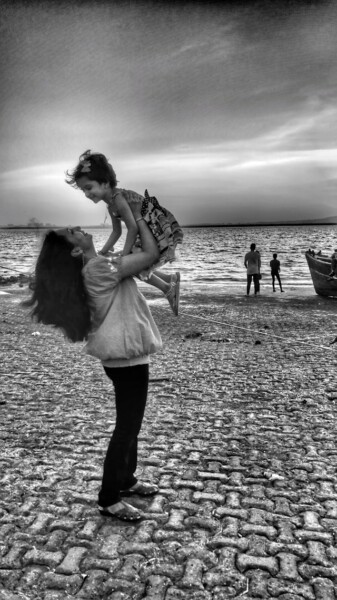
I folded up with a second cup of tea that mama had brewed for me – loaded with ginger and lemon – grass. I slip into her bedroom and undo our family albums safely tucked away in a shelf down below. I turned to a photograph of my towering 3 foot self beating her with a plastic bat as she collapsed on the floor, trying to escape me. She spent much of my childhood yielding like that – until I turned nine and decided to strike back. She began working in an office when I turned nine. Until then she was just my mama.
Jasmine, or Raat ki Rani, blooms at dusk, when no one is watching. Some flowers turn toward the sun; the Queen of the Night waits. Maa, too, like the Raat ki Rani, holds desires to which we remain unseeing.
Maa has always been something of a wild spirit, resistant to rules that claim authority through reason alone. She is not irrational. She is quietly devout, as if in communion with something larger than us. She reminds me of Mysore mallige, the kind we offer to Krishna—handled, strung, and already faintly bruised by the time it reaches the altar. Her presence lingers like the mallige in the puja room, long after the flowers have wilted.
Although delicate like mallige, she is no longer easy to bruise. Over the years, she has cultivated an exacting discipline. She learned quickly that her free-spirited, untethered ways were ill-suited to the chequered terms of the world. As the parent—the one in charge, the protector—she did not need reminding that my brother and I were her kryptonite. She made a practice of holding everything in place—at work, at home, within herself. These days, she says, half in resignation, that she can no longer mind me the way she once did. Instead, she strikes careful deals with her god.
Mama is fiercely duty-bound. Anything that unsettles her sense of familial peace, she meets with force. She believes in forgiving, not forgetting—she remembers, precisely, every time the resident aunties have let slip their small, cutting judgments on her way of raising us. Her smile never reaches her eyes when she sees Mrs. Pawar. It carries the memory of how small she was made to feel when we were younger—“They aren’t the good kids. Don’t mingle with them,” we overheard, standing at her doorstep on our routine rounds to invite friends out to play.
I spent much of my childhood strategizing on how I could be the best daughter. Above – Average Grades. Bharatanatyam Dancer. Dramatist. House Captain. Linguist. Strictly No Boyfriends, only boys who are friends. It was a code I followed closely: even children of broken families could fit in, if they knew the song and dance. Sometimes I think I learned the choreography early. I was already an adult, performing as a child.
Maa turns fifty-four this year. She looks early forties—Santoor mummy youthful. I tell myself she is aging. I am twenty-nine, with strands of white hair already threading through. They must have arrived while I rehearsed how to be the right daughter. They say white hair can be reversed now. I am trying to return what was never mine.

Meher is a public health practitioner with a keen curiosity to explore and address inquiries that rest at the complex intersections of government, civil society, and people’s movements. Grounded in the principles of intersectional feminism and trauma-informed care, she strives to advance equitable, just and contextualized research solutions that authentically center the voices of the participant(s) in question.