Fade Into You
Her toes, nails painted lilac to match her fingernails, pressed into the windshield, above the inspection sticker. She hummed softly, eyes closed, hands clasped to form a makeshift pillow against the passenger door. Her T-shirt rode up her back, exposing her fading tan. He slapped his cheek to get his eyes back on the empty road. Saying what he needed to say would be difficult enough without complicating matters with wayward feelings.
A sultry, mesmerizing slide guitar line, playing under sultry, mesmerizing lyrics, washed over them as he guided her beat-up Corolla across the Eastern Shore, past fields of what would be corn the following summer. She sang along, her voice as ethereal as the singer’s, about how strange it was the object of her affection never knew how she felt. After rubbing the sleep from her eyes, she poked him in the ribs and said, “Eyes on the road, mister.” Then she requested a quick side trip.
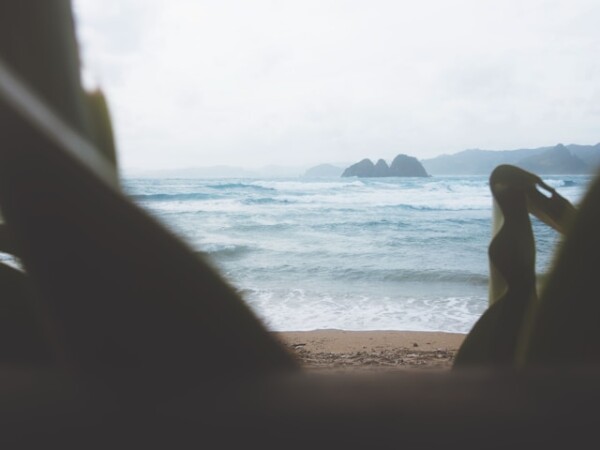
“What’s the big surprise?” he asked after pulling into a spot alongside the boardwalk, deserted on that chilly October evening.
She grabbed a beach bag from the trunk. “Let’s go look at the ocean.”
“I’m not dressed for the beach.” He pointed at his jeans. “Neither are you.”
“When did you become such a party pooper?”
He caught up to her on a blanket near the high tide line, pouring wine into two red Solo cups. “We’ll get there in plenty of time.” Her hand flourished toward the rolling surf, the pristine sand, the Moon obscured by nary a cloud. “Enjoy the serenity.”
She pulled a boombox out of the bag, hit play on the cassette deck, and patted the spot next to her. He waved her off, claiming the need to stretch his legs after the long drive.
“Suit yourself, weirdo.” Cup clenched between her teeth, she pushed up, steadied herself, and grabbed his hand. “Let’s dance.”
He contemplated telling her. But the wine, the moonlight, those bright eyes, that lilt in her voice. “Just one,” he said. “But then we really need to get moving.”
The song from the car came on, the closing track on a mixtape he made for her months ago. “It’s fate,” she said, swaying to the languid rhythm. His feet remained planted.
She drew out the vowels of the chorus as she twirled under his hand then spun into his chest, eyes half-closed, lips parted.
He jumped backward. “I’m sorry. I can’t do this.”
“We can take it slow.”
“No, I mean we can’t do this. Ever.”
She ran her hand through her bangs. “But I thought this is what you wanted.”
“It was. Then you made it clear very early on you didn’t feel the same way.”
“What can I say?” Wine sloshed over the lip of her cup. “You’ve grown on me.”
“It’s just.” He moved to brush a strand of hair out of her eyes—a habit picked up during these perhaps not so chaste months together—before stopping himself. “Well, I wasn’t planning on doing it this way.”
“Doing what?”
He exhaled loudly. “I’ve been seeing someone. And it’s getting pretty serious.”
Her head snapped back. “Seeing someone? Since when?”
“About a month ago. Actually five weeks.”
“And you kept it a secret?” she said, her voice cracking. ‘You tell me everything.”
“I don’t tell you everything.” He dug his toes into the sand. “I keep some things private, even from you.”
“Obviously.” She gnawed on her thumbnail. “I’m sorry. That was unfair. But how could you not tell me something this important?”
“There was never a good time.”
“So it had to be now.”
“I obviously didn’t plan for it to happen this way. This weekend was supposed to be her chance to meet everyone.”
“I’m going for a swim.” She turned and sprinted toward the water. He started after her, but the element of surprise gave her an insurmountable head start.
“Be careful,” he yelled.
She made a break for the meager surf, fell to her knees, waved off his offer to help, then clambered back toward him.
The chill of the Atlantic flooded his T-shirt. He knew he should wrap a towel around her and steer her toward the car. But he stood there, trying to convince himself that he didn’t want what she wanted.
He closed his eyes, heard the low murmur as his tongue found hers, his heart thumping, legs wobbly, the music whooshing like the surf. Only the end of the song pulled him out of the moment.
“I’m sorry, but I can’t.” He put his hands on his knees. His breaths came in gulps.
“You’ve only been with her for five weeks.” Her teeth clacked. She snatched a towel from the bag. “We’ve known each other for more than a year.”
“Trust me. I didn’t see this coming.”
“I want to know the real reason you haven’t told me about her.”
“I was waiting for this weekend.”
“That’s not an answer. But whatever.” She pulled the towel tighter across her chest. “So why isn’t she here?”
“Something came up at work.” He tried not to think of her, working late to complete a project, while he was struggling to extricate himself from a situation brought on by his own fecklessness.
“We were in a car for three hours and you didn’t say a word.”
“It’s not an easy thing to bring up, given all our, ummm, history.”
“How does what just happened fit into that, ummm, history?”
“A moment of weakness.” He regretted those words the second they left his mouth.
“A moment of weakness,” she repeated, without inflection.
“Understandable, given our history.”
“Again with our history.”
“I don’t know what else to call it.”
“History might be the right word,” she said. “A lot has happened between us.”
“I’m not trying to erase any of it.”
“And I didn’t hear you deny having feelings for me.” Her eyes were glossy, but her unblinking expression was inscrutable. “So, do you?”
“I guess that doesn’t really matter. Because I’m with her now.” He threw the boombox in the bag, yanked up the blanket, and tromped toward the boardwalk.
He sat in the driver’s seat, staring at nothing. When she got in, he cranked the heat and turned on the radio. A familiar guitar riff filled the space between them.
“I swear, if I hear this song one more time.” She pulled off her sandal and banged the heel against the preset buttons until news radio came on.
They drove the last few miles in silence interrupted only by her metronomic recitation of upcoming turns.
Nobody noticed the chilliness between them that weekend, the absence of the inside jokes and unforced intimacy. He grabbed a ride to D.C. at daybreak on Sunday with a friend of a friend.
They maintained a stilted friendliness, keeping up appearances but never uttering a word about their encounter. In December, she announced her intention to move to Chicago for a “change of scenery.”
He saw her for the last time two weeks into the new year. After they stuffed her belongings into her Corolla, she pulled him in for a hug. “I was feeling sentimental last night, so I listened to your mixtape. When that song came on, I recorded over it. Now it’s five minutes of dead air.”
The last thing he saw as she drove out of his life was her toeprints above the inspection sticker, faded but indelible.

Jim Parisi writes fiction and creative nonfiction. His writing has appeared in Hippocampus (upcoming), FlashFlood Journal, The Bluebird Word, Five Minutes, Club Plum, and The Good Life Review, among others. He has been nominated for the Pushcart Prize and Best Small Fictions. Jim spends most of his free time coaching Little League softball. He lives in Occupied Washington, D.C., with his wife, Beth, and their dog, Dolce.

