Her Bench
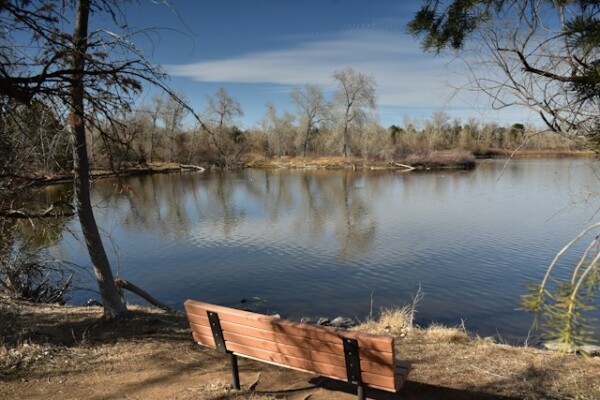
The park was neither big nor small. As in Goldilocks, it was just right. Right for the city and correct and proper for its residents. The acreage, simple farmland, and woods of poor second growth trees, was acquired more than a hundred years ago, then far from the center of commerce. Down the middle was a crooked creek, mockingly called Snake River. It flooded its banks most springs and the land to either side was rippled and not suited for farming. It wasn’t difficult to persuade the owners to cede the adjacent land to the county for future generations for a small sum and guarantee that they would always have access to the creek for their livestock. A two-mile stretch of Snake River was selected, and square plots on either side were added. On a map, the park appeared as if little bricks were laid randomly across a blue line. Officially named The Snake River Park, it was as broad as a mile in some places while constricted in others to under half a mile.
Thirty years later when the wealthy wanted to escape the growing problems of the city, larger homes were built around the park. Some of the “landed gentry” even kept riding horses and made use of the open spaces to for exercise. Expensive homes still surround the park, but the horses have been long gone except for the one standing motionless under a bronze Civil War general.
On a weekday, the park has only the infrequent walker and there are always empty benches available where couples can discreetly meet. One hundred yards south of the general was a bench with a dedicatory plaque.
Sadie, a middle-aged woman, hair tucked under a gray knitted hat, sat patiently waiting for her husband’s friend. Unaware that her right leg was continually bouncing, she swiveled her head left and right searching for Oscar. This was their one-year anniversary; she had made a reservation for a champagne luncheon at a small restaurant five miles away. My husband, God bless him, would never think to take me there.
She had arrived early, but now Oscar was more than ten minutes late and he was never late. His shoes were never scuffed. She worried he had been in an accident. She took out her smart phone and looked at the time. Twelve minutes now.
And again: thirteen minutes.
Her phone pinged the hour. He was fifteen minutes late. She replaced the phone in her purse and when she looked up, a very embarrassed Oscar was standing in front of her, a small nosegay in his hand.
“I’m terribly sorry for being late. I couldn’t get the flowers in advance. I know this is our first anniversary, and between the checkout line and traffic, well. I’m here now.”
Sadie could feel something was wrong. Oscar’s face was blotchy and he was sweating, neither were signs of healthy exertion.
“Don’t worry, Oscar, you’re here now and we can sit for a few minutes. You remember, this is where we first met. It hardly seems as if a year has gone by. What bliss!” She leaned over and kissed him.
Oscar trembled and sat on his hands. He swallowed, cleared his throat, then stared down the slope in front of them to the creek below.
“I’m sorry, Sadie, we need to talk. I know this is probably the worst possible time, and I really love you. I really do.” And then he stammered and took out a handkerchief to wipe his face. “I really do. But Stan must suspect something. He’s giving me weird looks at work, and I can’t remember the last time he suggested going out for a beer after work. That was one of our rituals. Wednesday at 5. Downstairs and around the corner for a quick beer at Hooligan’s to celebrate getting over hump day.”
Sadie swallowed the lump in her throat. She had suspected Oscar was getting cold feet the last time they had a tryst. He performed poorly. He tried to joke that at least at work he anticipated a performance bonus. She wasn’t going to make it any easier for him and bit her lip, staring directly into his eyes.
Oscar’s eyes moved like a scared chicken’s.
“Look, Sadie. Stan’s my best friend. We’ve worked together on several big projects. It feels like I’m stabbing him in the back. And I’m worried about my wife finding out.”
Sadie forced a smile across her face. She had been here before. “Well, you shouldn’t worry about Stan,” she lied. “We have an open marriage and Stan doesn’t care. He likes that I’m excited all the time. We play a game and he teases me about who my new lover is this time. Of course, he doesn’t know it’s you. That’s one of our rules: no names.”
Oscar ran his finger around his collar. “Yes, but I know and I’m no longer comfortable. For crying out loud, he sits next to me at office meetings.”
A large crow swooped over their shoulders, alighted fifteen feet down the slope to the creek, and began pecking at the ground for worms. Suddenly it turned and looked at them, cawing as if it had overheard their conversation. The next moment, it took two steps and flew off to perch on a river birch behind the general. It cawed several times, signaling that the sentinel was back on duty and everything was well.
Sadie stared at Oscar and waited. And waited. Finally, she suggested, “I guess you’d rather not have lunch.”
“Yes, I’m afraid so.” He took the phone from the left inside pocket of his suit jacket and scrolled through the messages. “Look, our morning crisis at home has escalated. You know teenagers. I’m needed, pronto. Sorry, I’ve got to rush off. Terrible timing.”
Sadie watched with growing resentment as Oscar almost ran across Snake River Drive to a side street for his car. She was convinced he had staged this domestic crisis.
~ * ~
Ten years after her divorce, feeling nostalgic, Sadie returned to Snake Park, strolling on a newer path reserved for walkers that weaved alongside the creek. Occasionally the afternoon sun bounced off a pool of water through shrubs lining the bank. It was a pleasant day with broken clouds, and the chirping of songbirds invited everyone to have not a care in the world.
When she saw the equestrian statue of the general Sadie turned and as she passed the statue, wondered if she should offer the apple in her purse to the horse. She smiled and stood for a minute in front of what she considered “her bench.” She saw the plaque as if for the first time and slowly read the inscription.
“Happy families are all alike; every unhappy family is unhappy in its own way.” Leo Tolstoy — Anna Karenina.
She clutched her arms across her chest. How true, how true.
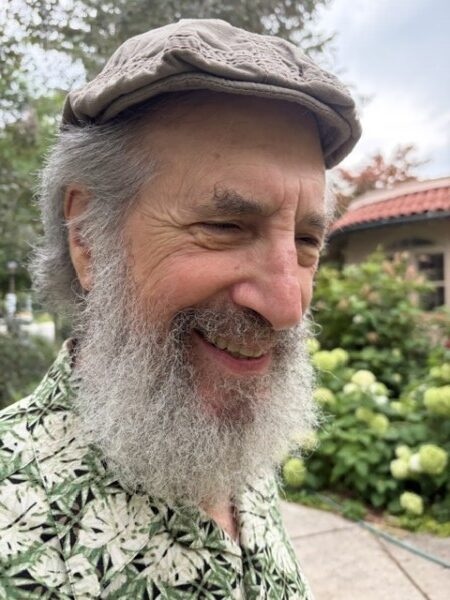
Kenneth M. Kapp was a Professor of Mathematics, a ceramicist, a welder, an IBMer, and yoga teacher. He lives with his wife in Milwaukee, Wisconsin, writing late at night in his mancave. He enjoys chamber music and mysteries.
His stories have appeared in more than one hundred and twenty-five publications worldwide.
Please visit www.kmkbooks.com.