Apex Predators of Another Spiritual Plane
I dreamt of the mountain lion, twice in three days. The first night she lived in my friends’ house. They were fostering her, as if she was a kitten. “She was swaddled in a cage for the first six months of her life,” Anna said. “Oh her? She’s harmless,” chimed in Syd. I tried to stay out of the mountain lion’s path as she slinked through their house, uncertain she was as innocent as advertised to be.
The next night I saw her from a distance. I hiked alone in the East Bay Hills, the smell of spring filled my senses. She ambled across a wash, in the broad daylight. The distance was enough for us to both remain anonymous. I don’t remember when I woke up, but I am certain I did.
The internet says mountain lion appearances in dreams indicate a newfound feminine courage or hidden threats that have yet to reveal themselves. My mother appears alongside the majestic beast in these dreams, as well as other dreams that haunted me each night that June. “Why are you here?” I ask, unsure of who the question is directed toward.
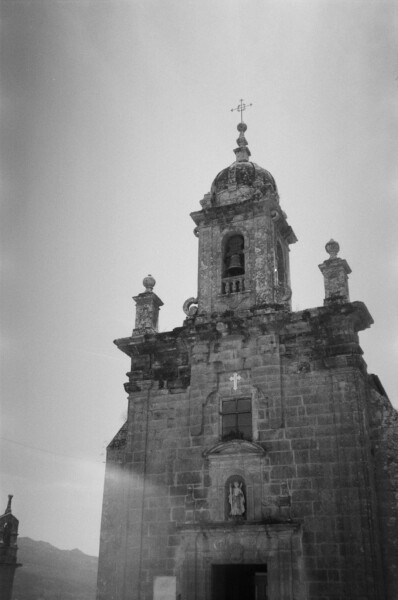
In the weeks after these dreams, courage did not find me on my pilgrimage on the Camino de Santiago, a series of ancient paths across Portugal and Northern Spain that religious pilgrims have taken to visit the remains of Saint James the Apostle in Santiago de Compostela since the 9th century.
I set out early one morning and in the streets of a seaside village, a cheerful old man stopped to ask if I was French. “Non, je suis Américaine mais je parle français… un peu.” I said, holding my fingers up in a small pinch for effect with a mischievous smile on my face. His face lit up with delight as he asked many questions. “Are you a student? Are you married? Do you have kids? Are you lonely? Why walk the Camino alone?” “Pourqoi pas?” I asked in return, shrugging. Why not? We giggled, and parted ways.
Later, I swam alone in a pool high on a quiet mountain. Close to the sun and lulled by the invasive eucalyptus trees swaying in the wind, I dozed on my pool chair meditating on a world that assumes a woman alone is unnatural. Solitude has always been safe for me. Surely that isn’t the lesson of my mountain lion? Why was I hiking the Camino, anyway? I’m not a Christian. I know nothing about Saint James. I’d set out with the intent to connect with what I must take responsibility for in my life, but now I wasn’t so certain this pilgrimage wasn’t just another way to run from what haunts me.
My stress dreams normally surface as visions of my teeth falling out. In the weeks leading up to the Camino, my dreams took on the qualities of long journeys where I was hidden, unreachable, or invisible. Most nights I’d lucid dream and enter sleep paralysis despite having multiple “false awakenings,” the special hell of being in a particularly terrifying dream, knowing it is a dream, thinking you’ve finally woken up from said dream, only to realize you are still asleep, trapped. These nightmares left me worn thin during weeks of work travel, nine time zones away from my friends and family and confronted with invisibility whether I was conscious or not. One dream took the form of a slow unwinding journey in which I was in college again. I took classes in ballet, swimming pool maintenance, and coached youth soccer with a local city counselor played by B-list actor Corey Stoll.
As the dream drew to an end, I exited the library on my college campus. The library doors led to a set of steps that opened to a field 3,000 miles away that sits above my elementary school. An ex-girlfriend walked toward me with a friendly smile on her face. “Finally!” she exclaimed in her generous alto-toned voice. “I’ve been seeing you everywhere, but you haven’t been able to see me!” she said. It struck me as odd. And still, we embraced gently. She smelled like her Adidas cologne – clean and with a hint of green apple. I felt the texture of her fine, curly hair brush my cheek as we released from the hug. “What do you mean? I haven’t seen you anywhere,” I replied, overwhelmed by my senses. I woke up in my bedroom on Stanyan Street in San Francisco, alone. The smell of the sweet grass at Yankton School, fading. I tried to fall asleep again… sometimes I can continue my dreams but sleep evaded me. The dream was over.
I was dreamless after I returned home from Spain but the question of my visibility and relevance remained. “It’s been ages since I saw you! You’re kind of out of the scene now though, aren’t you?” someone said to me offhandedly at a picnic. It was true. It had been some time since we’d seen one another. I had lost the energy to go to the feral dyke parties and disappeared from social media. An earth shattering trio of life experiences at the end of last year spurred me to retreat inward. In comparison to my former public life, I might as well have been dead.
But I am very much alive. The tree falls in the forest, regardless of if it is heard. Quick love notes emerge from liminal space in the form of the 16 postcards I mailed from Northern Spain while on my very long walk. My life continues in the wings off stage, even if a thousand Instagram “friends” don’t have a front row seat to it. I am starting to think humans weren’t meant to have so much of our lives witnessed; our energy accessed passively, constantly from the rectangle glow of the smart phone screen.
When I signed out of the social media apps all those months ago, it was out of fear. I couldn’t bear witnessing my community continue on. The earth had fallen out from under me. There were brief moments I considered signing back in… only to never redownload the apps. And then, there is now. I have come to realize I lost the taste for being seen and seeing others in this way. The idea of having a social media presence recalls Splenda, not cane sugar.
I’ve lost the taste for it. That’s what I was saying. I’ve lost the taste for losing entire evenings tapping through Instagram stories. Drinking, gulping, even chugging the ten second snapshots of the lives of people I hardly know. This vortex slowly contributed to chronic dysregulation and dissociation from my own life. It was an energy transfer I opted into – a bit like data sharing consent buttons at the bottom of subscription pages. The energy of other people’s ten seconds influenced my actions in an insidious, nearly unattributable way.
I don’t consent to being subconsciously owned by a culture dictated by algorithms that wears the suit of human skin but is held up by the bones of something much more sinister. That choice means taking responsibility for entering into a type of counter culturalism. It means accepting that I may be considered less relevant to the broader world. To be relevant in many social cultures now, one must be accessible; giving their energy and receiving the energy of others at all costs.
And yet I am not immune to the burning desire to stay relevant. Over the last 8 months, I have submitted to the constant movement that capitalism demands. I’m not certain how much of that movement has manifested from true interest or from the fear of dying in the minds of people I once craved to be loved by.
You may not be able to see it, but I’ve filled my time with an unending list of stuff to attempt to fill the void of nothingness, to attempt to create something from nothing. I’d save you from the endless list but it speaks to the senses of my overwhelm. It includes: a 3 month astrology course, a San Francisco civic engagement course, joining the board of a local nonprofit, becoming a volunteer counting hawks with the National Park Service, learning to knit, hosting friends for weekly dinners, reading, journaling, exercising four times a week, captaining a kickball team, rehabbing a sprained ankle, hosting a queer astrology meet up, and submitting my writing in hopes of being published. I’ve traveled extensively for work and woken up most days this year thinking, “I fucking love this job.” I met His Royal Majesty, the King of England, and hiked 105 miles over 9 days on the Camino de Santiago. In so many ways, this has been my fucking year. What more could a woman yearn for? What more do I have to be?
The constant motion and intensity of it all feels performative, even though for the first time in over two decades there aren’t any spectators. Very few people get to see these things happening because I’ve decided very few people get to see them. But the compulsion to collect affirmation of my worthiness through worldly experiences lives on. There isn’t a gallery in which I can display such attempts at possessing the immaterial. In the nonexistent Gallery of the Immaterial, inner critics take the microphone at center stage. The light shines on the shame that fuels my body and its inability to sit still.
“A try hard,” echoes the voice of Randy Jackson.
“Eldest daughter achievement syndrome much?” crones Paula Adbul.
And last but not least is Simon Cowell, his posh accent rings out across the darkness. “Her subconscious is trying to make up for the void of losing her grandmother, her mom, and her girlfriend. What kind of person is she?”
All three of these relationships, as they once were, are dead, but only the first of these people is actually dead. My body struggles to know the difference.
It took 100 miles of walking on the Camino only for me to realize on the last morning that these vicious, judgemental voices have been speaking in the hushed backrooms of my psyche over the last eight months. It took 100 miles of walking in an average of 90 degree fahrenheit heat for me to summon the bravery to admit the full extent of the shame I feel. I kept thinking to myself, “what kind of person stops talking to her mother?” The response I heard was a painful one. An impossible kind of person. Someone who isn’t grateful enough, happy enough. But the truth of it is: there is no actual referendum on my worth other than the one I created and have evaded accountability for. Anything to avoid pain.
There are so many ways to classify the end of meaningful relationships… and I’ve tried them all. The most straightforward and simple truth is that my most recent relationship ended because we’d run the course of trying to meet one others’ needs. That is a very dissatisfying end to a partnership, but I experienced it as a mostly dignified ending. There wasn’t a fight or some terrible betrayal. Instead, there were notes of gratitude, a quiet Thanksgiving together, and one final loving conversation saying goodbye on my couch. It was devastatingly sad, but it wasn’t a trauma or a senseless tragedy. Our relationship ended with integrity, respect, and love.
Or at least… That is what I have told myself, over and over again. It’s what I have said out loud. It’s the tidy thing to say. But as I edited this work, I circled the last sentence in the previous paragraph over and over again with a stern note, “Are you telling the truth here, Jones?”
I thought I was telling the truth. I told myself this tidy lie about the dignity of that relationship ending for months. This lie has worn the thin veil of my obligation to remain loyal to the memory of the partnership. But when I push myself a little more, I can see with increasing clarity that it’s not my ex or our relationship that I was protecting. I was trying to protect myself in a way that is undignified and unkind to me, my former partner, and the memory of that relationship. I have been very slow to let in the extraordinary discomfort, embarrassment, and shame associated with taking accountability for a lifetime of overfunctioning to show up for people who weren’t right for me, rather than prioritize showing up for myself.
I buried taking accountability for my actions because I internalized a story that that relationship must have ended because I wasn’t good enough, that I wanted too much. Somewhere in the shadows, I took on the belief there is something unfixable about me, an insatiable desire that is impossible to ask of anyone reasonable, healthy, and truly loving in this world to try to meet. I understand now where I learned to think of myself as a monster who will be left alone. The ending of that relationship is not to blame.
That breakup coincided with a terrible accident. My mom took a fall in the night, resulting in a long hospitalization. The drugs she was given for pain in the hospital acted as a changeling, replacing my mom with a version of herself I’d only known as a child. Vapid, suspicious, and volatile – she mistrusted every word and blamed every inconvenience on the people around her. “Nobody in here fucking cares about me,” she’d lob across the room as if it was a dare to disagree with her. She was unreachable, medically noncompliant, and terrifying.
For so long, I’d feared this version of my mother without much tangible evidence that she’d actually ever existed. My body’s memory always knew though, and nothing could prepare me for re-encountering her changeling: the mother of my earliest memories, the mother of my most vivid nightmares. “Why are you here,” I asked the changeling of my mother… or was she the mountain lion?
Like many, I have tried to be a good daughter. Being a good daughter helped me survive for a long time. Being a good daughter meant that Mom might not yell when she got home from work or rage through the hallway late at night and pull me out of my bed to re-vacuum the hall because I hadn’t done it right the first time. Being a good daughter taught me to read her moods and know when to drop everything to fawn. But being a good daughter now doesn’t get me shit.
Being a good daughter taught me to abandon myself as I tried to build lives with past partners or stay in jobs that weren’t right for me anymore. Being a good daughter meant never being honest about how I felt because there was a risk that my mother might actually drive away forever, as she threatened to do many times over the years. Being a good daughter to a terrifying mother taught me the shameful art of trying to manipulate and control people – without realizing or consenting to it – in order to keep the peace. It taught me that to love is to possess, and I don’t actually believe that. I have been changed by love, romantic and platonic, that did not try to control me, and did not accept when I tried to control them. I am not that kind of person. I cannot be a good daughter anymore because being a good daughter means being someone I am not and do not want to be.
In the days after arriving in Santiago, I crumpled under the weight of these questions. “What kind of daughter does this?” My friend Anna echoed back to me over the phone, as I sobbed to her on a Sunday at 7:30 in the morning . “A daughter who has given everything to be good. A daughter who has no other choice,” she said quietly. A daughter who stops speaking to her mother is someone who wants to take responsibility for making herself whole, no matter how painful.
A few nights after I returned home, I pulled tarot cards I’d never read before. It was the peak of summer in San Francisco. A little bit of light filtered through the windows. Jet lag had drawn me toward bedtime by 8:15pm. It was the kind of reading that forced me out from under the sheets and onto my knees to pray. I don’t remember the cards, only that they spoke to the matriarchal pain of the past, the frozen apathy of the present, and the hopeful spark of the future. I rocked on my knees, and stretched my still sore feet from the Camino on the wooden floor.
My tanned hands folded together, gripping for dear life. What came out was the sad prayer of a woman I barely recognized, speaking haltingly simple words. She begged God that the hope of the future will not distract her from the joy of the present. Her kryptonite.
“I am worn down from being hopeful about the future. Dreaming of the future is sometimes another name for anxiety,” she said to the warm summer air. “Perhaps I joined Icarus in the sky. I’ve spent most of my life too close to the sun. Do I know better now that I’ve plunged into the darkest depths of the unknowable sea after cutting the metaphorical umbilical cord between mother and daughter? Being that high up in the sky hardens one’s skin.”
As my body passed through the current of the salty sea, my hard and burned skin began to soften. Call it a prayer answered, having traversed the river Styx. At some point, I summoned only the courage to sleep. I didn’t dream of the mountain lion again. I didn’t dream at all.
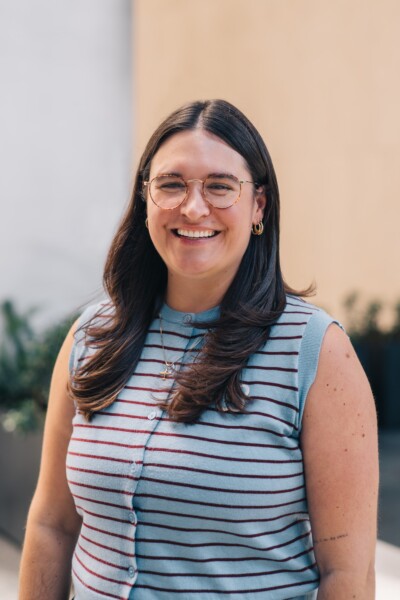
Cassidy Jones is a queer creative nonfiction writer based in San Francisco’s Haight-Ashbury neighborhood, where she writes from her secondhand salmon colored couch and regularly loiters in Golden Gate Park. Raised on the outskirts of a rural timber community in Northwest Oregon, she writes lyric essays exploring belonging, spirituality, and grief. Her essays can be viewed on Meaningbull – her Substack publication delving into the juice and rot of daily life.