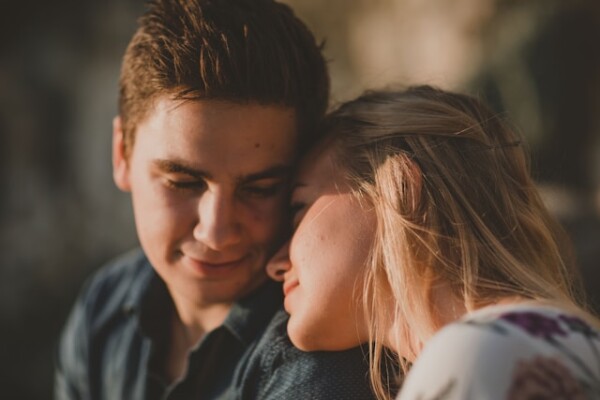
Me and Ardie
I was sixteen that summer, two years shy of the service, and I never married Ardie. But she taught me something that afternoon in Brookside Park that I did not fully understand until many years later: that there is a difference between wanting something and being ready for it.
At sixteen those two things seemed exactly the same.
Her name was Ardie Kessler and she lived one town over, in a yellow house on a street where the elms still met overhead and the shade stayed cool even in August. She was three months younger than me but ten years more certain of the world. That certainty was the first thing I noticed about her—before the dark eyes, before the laugh, before any of it.
She moved through life as if she’d been briefed on how it worked.
I, on the other hand, was still trying to read the manual.
We were in Brookside Park on a Saturday in May, on one blanket and under another, hidden from the children chasing each other across the open grass. Their voices reached us muffled and distant, like a radio playing in another room.
The season hadn’t quite committed yet. The sun was working at it but the breeze still carried a trace of April, and under the blankets with her was the only warm place in the whole county.
“I’m hot,” she whispered.
Her breath brushed my cheek and my sixteen-year-old brain immediately went into a rolling boil.
“You’re hot?”
I pulled the blanket back from her face and she pulled it forward again, quick and decisive.
“Not that kind of hot,” she said.
Then she tugged me closer in a way that made it perfectly clear she meant exactly that kind of hot.
“Don’t make it complicated.”
I was trying not to make it complicated. What I mostly was, though, was twenty miles past ready, a fact that seemed to amuse Ardie in a warm and not unkind way.
Every small thing she did was both invitation and instruction—an invitation to come closer and an instruction to slow down.
“Let’s go,” I said finally.
It came out rougher than I intended.
“Where?”
“A room somewhere.”
The moment the words left my mouth I heard how they sounded and the heat in my face turned into something else entirely.
Ardie studied me for a moment, weighing the idea like someone older might weigh a decision. Then she laughed—really laughed—and pulled me back under the blanket and kissed me in a way that made the embarrassment disappear.
“Don’t be so rushed, Baby,” she said against my mouth. “I said I was hot.”
A pause.
“That’s an opening statement.”
Another pause.
“I want it too.”
I waited.
“Someday.”
“When?”
“Someday.”
“When when when when—”
“Someday.”
She said it the way you close a window—firmly, not angrily, with the clear understanding that the air outside is not coming in right now.
At sixteen that felt like torture.
Looking back, I understand something I didn’t then. Ardie wasn’t saying no. She was saying not yet, and the difference between those two things is something young men rarely understand the first time they hear it.
For a long time we stayed under the blankets, tangled together, breathing each other’s air and daring the world to notice us.
The world, as it turned out, did not notice us.
The children kept playing their games in the pale sunshine and the park kept being a park and we kept being sixteen and fifteen under our blankets, which is its own kind of invisibility.
***
Later we rode our bikes through town, racing past parked cars and Saturday errands, nearly spilling on a patch of loose gravel at the corner of Third and Elm. We caught ourselves laughing instead of falling and kept going, breathless, chasing each other the last two blocks to the ice cream shop on Delaware Avenue.
The place smelled of waffle cones and the particular chocolate that becomes institutional after enough decades.
Ardie ordered a sundae. I ordered a cone and immediately regretted it when I saw what she had—the whipped cream, the cherry, the whole silver boat of it.
We sat across from each other in a red vinyl booth while she teased me about my hair, which had done something complicated in the wind on the ride over. I leaned across the table and flicked a chocolate drip off her cheek before it reached her chin.
“I’m going to miss this,” I said.
I was looking at my cone but I meant everything.
“Miss what?”
Her eyes were bright, doing that thing they did when she already knew the answer and wanted to see what you’d do with the question.
“Everything.”
She grinned and flicked the cherry from the top of her sundae.
It hit me square in the center of the forehead.
I left it there for a moment on purpose and she laughed until she had to put her hand over her mouth.
Outside the afternoon had turned that long golden color early summer specializes in—the kind of light that makes you aware of the moment even while you’re still inside it.
We walked our bikes back toward the park without talking much.
That summer Ardie and I were learning a language that didn’t need many words—a language made mostly of silences and the careful ways we didn’t quite look at each other.
***
Near the end of the summer we went down to the lake.
The sun was sliding behind the trees and everything—the water, her face, the flat stones we were choosing—was lit in that particular gold that belongs only to late evening.
We skipped stones.
She was better at it than I was, calm and level-wristed, releasing the stone at exactly the right instant. Mine tended to plunge.
Hers skipped three times.
Four.
“I wish summer lasted forever,” I said.
It was a childish thing to say but she didn’t make me feel childish for saying it.
“Nothing lasts forever.”
She turned another stone in her fingers until she found the flat side.
“That’s what makes it good.”
She threw.
Four skips.
The last one a small desperate bounce before the stone disappeared.
I have lived long enough now to know she was right, and the knowing of it is a complicated kind of wealth.
***
Summer ended the way summers always do—not gradually but all at once, the way a fire goes out.
On the last night we sat on the porch of the yellow house while the moths worked the light above us.
She kissed me once more and held me there a moment.
“Not so fast, Sport,” she said quietly. “Touch me awhile.”
I did—clumsy and reverent, my hands learning the brief geography of her while time allowed it. She touched me back with the same mixture of curiosity and restraint, and when things threatened to move further she stopped them gently with a small laugh.
That was the balance she understood and I was still learning.
The strange middle ground between wanting something and being ready for it.
She still smelled like summer—grass and warmth and something particular to her that I have never been able to name.
She lived in another town.
When September came it came for us the way it comes for everything, and we didn’t fight it. Ardie was not a girl who seemed surprised by the way things went.
***
I never married her.
I went into the service and came home and married someone else, someone fine, and had a life I would not trade.
But I still carry that summer the way you carry a coin in your pocket—touching it without thinking, feeling its particular weight.
The blankets.
The breeze in the park.
The cherry off my forehead.
The way she made me wait while making me feel that I was the only thing worth waiting for.
That summer taught me something I didn’t know I needed to learn: that wanting and patience can live in the same body at the same time if you’re brave enough.
And that some moments—precisely because they never quite become what you expect—stay with you longer than the ones that do.
Nothing lasts forever.
That’s what makes it good.
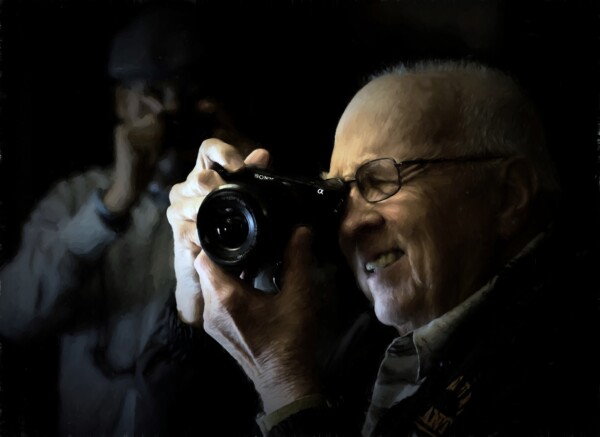
Dale Scherfling is a fulltime writer/poet and a creative writer and photographer instructor. He is a former newspaper sportswriter, editor and photographer and retired U.S. Navy photojournalist. His work has been accepted by The Monterey Poetry Review, San Diego Poetry Annual, Chiron Review, Mangrove Review, Letters Journal, The Blotter Magazine, 25:05 Magazine, Discretionary Love, Writing Teacher, Third Act Magazine, Yellow Mama, Close to the Bone, Flash Phantom, Dispatches Magazine, Five on the Fifth and Oddball Magazine. He is the recipient of three U.S. Army Front Page Journalism Awards and is also a college lecturer and instructor of photojournalism, photography, and music.