You Can Stay If You Want
They had him on coolers because he was quiet and he didn’t complain about the cold on his hands. That was what the woman who did the schedule told him once when she was counting lottery tickets and not looking directly at him.
“You’re good in the back, Manny,” she said. “Some guys just aren’t.”
He took it as praise. It was something, anyway.
The coolers at the gas station on Gulf-to-Bay were old and sweated all the time. The rubber seals had gone soft and the doors didn’t like to close. He stocked water and Gatorade and beer and the tall cans with fruit on them that never looked like real fruit. He did it in the morning mostly, before the tourists came in from the hotels and the fishermen came back from the Gulf with the stink of fish and outboard fuel on ‘em.
The early part hit him best. The sky was pale and empty then. The air hadn’t yet turned thick. He could hear the traffic on 19 farther off. That big animal clearing its throat.
He had graduated in May. He hung his cap in his mother’s apartment in Tampa and then the next week he moved to Clearwater because his friend had a couch and a divorce. His degree in communications was in a folder on top of his bag in the closet. He did not know what to say about it so he didn’t. When his mother called she asked if he had printed it.
“Not yet,” he said.
“You should,” she said. “It’ll make you proud.”
“I’m proud without it,” he said.
She made a clicking sound with her tongue that meant she had heard him and would forget it when the soap opera came back on.
He met Leo in August when the heat sat on the town like a big man in a small chair. The boss brought him in right before eight.
“This is Leo,” he said. “He’ll do counter and outside. Show him where things are, Manny.”
Leo was shorter than Manny by a little and had a wiry look, like something pulled tight and then let loose. His hair was cut close on the sides and curled on top. His nametag said L. RUIZ but the ink was already smeared and half gone. He had a tattoo of a wave on his forearm that looked like it hurt when he got it and not much after.
“Hey,” Leo said.
“Hey,” Manny said.
They shook hands because the boss hadn’t walked away yet. Leo’s hand was dry and warm. Manny’s was cold from the cooler. Leo made a face when he felt it.
“Damn,” he said. “You dead or what?”
“Cooler,” Manny said. He pulled his hand back and wiped it on his jeans. He felt stupid doing it.
Leo laughed. It was a quick laugh, like a cough.
“Show me the smokes,” Leo said. “I’m going to screw that up and I don’t want to.”
Manny showed him the shelves behind the counter. They all looked the same to him but he knew where things went. That was what he was good at now. Knowing where things went and putting them there with his hands.
By the end of the first week Leo called him “manito” sometimes, like a little brother, and sometimes just “man.” Manny called him “bro” once and it sounded wrong in his mouth so he didn’t do it again.
They worked together most afternoons. Manny in back, Leo at the register, talking to the customers, making jokes about the heat and the prices and the way the lottery never liked anybody on this street.
“Maybe it likes the Publix,” he’d say. “You should go lose your money there.”
The customers liked him. Even the quiet ones who never looked up liked him enough to come back. The boss took note of that. He started putting Leo on the later shifts too, when the sun went down and the drunks came in and the kids in lifted trucks came for beer they had no business buying.
“You watch your ID,” the boss said. “They’ll try it with you. You look young.”
“I am young,” Leo said.
“Then watch it,” the boss said again.
Manny watched him too. He watched the way he stood with one hip against the counter when it wasn’t busy. The way he held his phone in the gap between customers, thumb moving fast. The way he pulled the trash bag from the can outside with one clean jerk and tied it like a fisherman. Little things. Nothing big.
At home he shared a two-bedroom near the causeway with his friend from school, Nelson, and Nelson’s cousin. The couch had been his until the cousin came and now he had half a room and a mattress on the floor. The AC unit in the wall made a sound like someone dragging a chair very slowly across the next room, but Manny slept soundly every single night.
“You’re quiet these days,” Nelson said one night when the three of them ate cheap rotisserie chicken from a plastic shell.
“Tired,” Manny said.
“We’re all tired,” the cousin said. “Maybe you need to get laid.”
They laughed. Manny did too, the small kind of laugh that was a shape more than a sound. He did not think about getting laid. He thought about the cooler doors not shutting right and the way Leo slid the drawer closed with his hips when his hands were full. He slept lighter that night than usual.
One afternoon in September the rain came in hard off the Gulf. It turned the air to cotton. The pumps were empty. People pulled into the lot and changed their minds and drove off again. The sky went green-gray and the palms across the street bent in one direction.
Manny was stocking the beer then. He watched the parking lot through the glass. The drops hit the concrete so hard they bounced.
“Feels like the world is boiling,” Leo said. He leaned back on the counter and watched it too.
Manny shut the cooler door with his hip. It didn’t latch. He pulled it again until it did.
“You walking?” Leo said.
“Yeah,” Manny said. The bus stop was a few blocks away. In this it might as well be a few miles. “Not now though.”
“You’ll drown,” Leo said with a small chuckle. “I’m driving. I’ll take you.”
“It’s okay,” Manny said. He said it automatically.
Leo turned his head and looked at him. His eyes were very dark in this light.
“You live that way?” he said, jerking his chin toward the causeway.
“Yeah,” Manny said.
“Well I’m going that way anyway,” Leo said. “Don’t be dumb.”
Manny felt his ears get hot. It was stupid to feel shy about a ride. It was just a ride.
“Okay,” he said.
They waited out the worst of it by pretending to wipe the counters. When the rain had turned from a sheet to ropes, the boss told them to go. Leo clocked out on the small screen and Manny put his finger where his name was printed and the machine beeped.
The parking lot had turned to a low shallow lake. Leo’s car sat in it like a stubborn boat. It was an old Civic with one headlight cloudy and the other clear. The seat covers were torn and the steering wheel had a wrap that used to be black and now wasn’t. A pair of dice hung from the rearview mirror and clicked against the glass when he opened the door.
“Don’t mind the mess,” Leo said. “She’s got character.”
There were fast food bags in the back and a surfboard waxed and dinged. The car smelled like someone smeared sunscreen and fries on the seats.
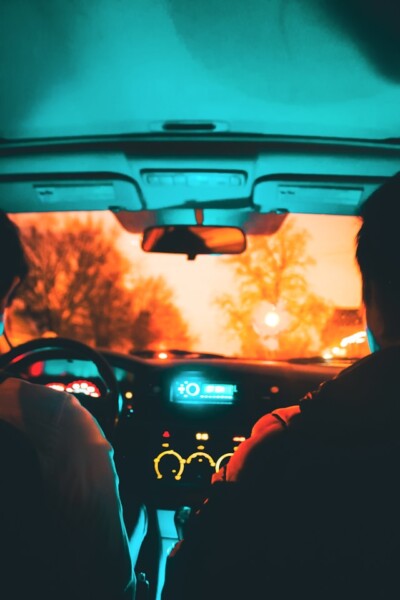
Manny sat and pulled the door shut and the water on the window ran down in rivers. They drove in the rain and the wipers made their sound, that steady two-note rhythm. Leo leaned forward a bit over the wheel, squinting.
“You from here?” he said.
“San Juan,” Manny said. “Then Tampa. Then here.”
“Clearwater’s a downgrade,” Leo said.
“The water’s pretty,” Manny said.
“That’s all you can say about it,” Leo said. He laughed. “I’m from Hialeah. This feels like vacation but without the good food.”
They passed the strip malls and the car lots and hit the stretch where the road went up toward the bridge. The water on both sides was a dull slate under the clouds. Boats sat at their moorings with their bows in different directions. Manny could see a sliver of bright water far out where the rain line ended.
“So what’d you study?” Leo said.
“Communications,” Manny said. He always said it quickly. It felt better that way.
“What’s that?”
“Talking,” Manny said. “Marketing. Media.”
Leo snorted. “You’re quiet for that,” he said.
“Maybe that’s why I’m stocking beer,” Manny said.
Leo looked at him once, quick. “You’re funnier than I thought,” he said.
Manny felt the laugh in his chest and let it out. It came easier now.
They pulled into the lot of his building. The car idled under the overhang. The rain on the roof sounded like a fryer.
“You want a beer?” Manny said, surprising himself. “We got some in the place.” It wasn’t his beer. It was Nelson’s, but Nelson wouldn’t mind.
Leo looked out at the rain like he was checking in with it.
“Sure,” he said. “Just one. I got my abuela’s car tonight, she’ll smell it if I drink more.” He smiled. “She has that nose.”
They went up the stairs with their shoes squeaking. The air in the hall was warm and damp. Nelson wasn’t home. The cousin wasn’t either. There was a plate with rice dried on it in the sink and a towel on the couch.
“Place is nice,” Leo said.
“It’s not mine,” Manny said.
Leo pulled a beer from the fridge and handed Manny one too. They sat at the small table by the window. Outside the parking lot was a sheet of water with the tops of tires sticking out. A man in shorts and no shirt pulled a trash can back by the wheels. He slipped once and caught himself and then looked around to see if anyone had seen. They had.
“I thought college kids lived in good apartments,” Leo said.
“We’re not those kids,” Manny said.
“What kids are you?”
“Other ones,” Manny said. It was easier to joke than to say the thing about being the first in his family and not knowing what to do with it. About feeling like he’d tricked the world and now the world had set him in front of a cooler and said, Here. This is the temperature for you.
Leo drank and looked around. His eyes landed on the folder on top of Manny’s bag in the corner.
“That it?” he said. “The paper?”
Manny nodded.
“You wanna see?” he said. He didn’t know why he asked.
“Sure,” Leo said.
He opened the folder and held it out. The degree was on thick paper with gold on it. His name looked strange there. Formal. Manuel Acosta, B.A.
Leo took it in both hands like it was something breakable. “Damn, manito. Look at you, all fancy.”
“It doesn’t do anything,” Manny said.
Leo shook his head. “Not yet,” he said. “But you got it. That’s something.”
He handed it back. Their fingers touched on the edge of the paper. Manny felt it like a small electric thing. He did not look up.
“You could get out,” Leo said. “If you want. Use that, whatever. Go somewhere.”
“Where?” Manny said.
Leo shrugged. “Not here,” he said. “Somewhere that isn’t sticky all the time.”
“Puerto Rico is sticky,” Manny said.
“Yeah, but it’s yours,” Leo said, with a quick grin. “This is like being stuck in somebody else’s bathroom.”
Manny laughed then. He laughed hard enough he had to set the beer down.
Leo watched him and smiled slow. There was something soft in his face when he did that. It made Manny’s throat feel tight.
“You got a girl?” Leo said.
Manny shook his head. “You?”
Leo wore the question for a moment, then set it down. “Sometimes,” he said. “Not really.”
The AC unit knocked on. The little table shook a bit with it. The rain on the lot had thinned. You could see the lines of the spaces again.
“I should go,” Leo said. “Before abuela starts thinking they kidnapped me at the gas station.”
He stood and stretched his arms overhead. His shirt lifted an inch and Manny saw the line of his stomach. He looked away.
“Thanks for the beer,” Leo said.
“Thanks for the ride,” Manny said.
They stood in the doorway just a second too long. Then Leo slapped him lightly on the shoulder, twice, and was gone down the hall.
That night Manny lay on his mattress and listened to the AC and the cars and the little sounds the building made. He had read once that love was something you did not owe and did not always confess. That you set it aside like money you only spent on certain days. It seemed true at the time. It seemed true now.

Jon Negroni is a Puerto Rican author based in the San Francisco Bay Area. He’s published two books and his most recent fiction has been published with IHRAM Press, The Fairy Tale Magazine, Speculation Publications, and Cetera Magazine. He also has forthcoming work with Oddity Prodigies, Neon Hemlock, Inked in Gray, and more. Jon was also a finalist for the 2025 BCLF Elizabeth Caribbean-American Writer’s Prize and is a Best American Short Stories of 2025-nominated writer.